

No Products in the Cart
August 2026
Excellent product, definitely recommend it.
Mr DevVerified product review
Reviewed: RAINPOD™ Full Kit

Simple, clever rainwater harvesting. Fill all your water butts from one downpipe and put them wherever suits you. Designed and made in the UK.
Excellent · 4.5 on TrustpilotLearn
Talk to us
Be the first to hear about new products, offers and ways to save more water.

Buy a water butt and most people put it wherever there happens to be a gap by the wall — usually right under the nearest downpipe. That's an easy start, but it's not always the best spot, and a few minutes thinking about positioning before you commit can save you a lot of awkward watering-can trips later. Here's what actually matters when you're deciding where a water butt should go.
A water butt needs a downpipe (or a diverter from one) to fill up, so the obvious spot is directly beneath one. That works fine if the ground there is level, firm, and you don't mind looking at a water butt every time you glance out of that window. The trouble is that the most convenient downpipe for filling is rarely the most convenient spot for using the water — it might be down the side return, behind the bins, or nowhere near the beds and pots that actually need watering.
You don't have to choose between "easy to fill" and "easy to use." A kit like RAINPOD connects to your existing downpipe and pipes the water to a butt positioned wherever suits your garden better, so you're not stuck putting the butt directly under the pipe just to fill it. RAINPOD and RAINTAP are currently out of stock, but you can leave your email on the RAINPOD product page to be told when they're back.
A full 200-litre water butt weighs roughly 200kg once you add the butt itself, so wherever it sits needs to be flat, firm and able to take that weight without sinking or tipping over time. Patio slabs, a concrete path or a proper paving stone base are all fine. Bare soil, loose gravel or a sloping lawn are not — the butt will settle unevenly, and a tap-height water butt that's tilted even slightly can crack its stand or strain the outlet fitting. If you don't already have a hard, level spot near where you want the butt, it's worth laying a simple paving slab base first rather than finding out the hard way after a few months. For bigger setups with multiple butts at different points in the garden, our guide to understanding ground levels covers how height differences between butts affect flow.
Whatever sits under the tap — a watering can, usually — needs to fit underneath it. Standing the butt on a stand or a couple of course bricks solves this and also improves water pressure, since water flows faster out of a tap the more height it has above the outlet. If you're planning to run a hose off the tap rather than filling cans by hand, that extra height matters even more, so it's worth deciding this before you lay any paving.
A water butt in full sun all day will warm up faster and grow algae more readily than one tucked into shade — not a safety issue for garden use, but it does mean more cleaning. Where you have a choice, a spot against a north- or east-facing wall, or under a tree canopy, keeps the water cleaner for longer with no extra effort. It's a small factor compared with access to a downpipe, but worth weighing if you've got two equally practical spots to choose from.
It's easy to forget, when picking a spot, that you'll need to get a watering can or hose underneath the tap, and ideally space to stand comfortably while you fill up. A butt wedged into a tight corner against a fence looks neat but can turn a thirty-second job into an awkward squeeze every time. Leave at least enough clearance in front of the tap for a full watering can to sit flat, and check nothing — a bin, a shed door, an overgrown shrub — is going to encroach on that space as the season goes on.
If you think you'll want to add a second or third butt later, it's worth planning the layout now rather than squeezing extras in wherever they'll fit. Butts connected in a chain need to sit at a similar level to flow properly between them, so a flat run along a fence line or wall usually works better than scattering them at different heights around the garden. Our guide on connecting multiple water butts has more on laying this out from the start.
A downpipe gets your water butt filled, but it doesn't have to dictate where the butt lives — routing the water to a more convenient spot is often worth the extra step. Beyond that, check the ground is flat and firm enough to take the weight, give the tap enough height and clearance to actually use, and favour shade over full sun where you have the choice. Get those right and you'll be glad of the spot you picked every time it rains.
RAINPOD™ fits your downpipe and fills your water butts or tanks wherever they sit in the garden. Free to fill, no electricity, fitted in about 10 minutes.

Is the rainwater in your water butt safe to drink, wash veg in, or fill a paddling pool with? Here's the honest, practical answer...
Read article →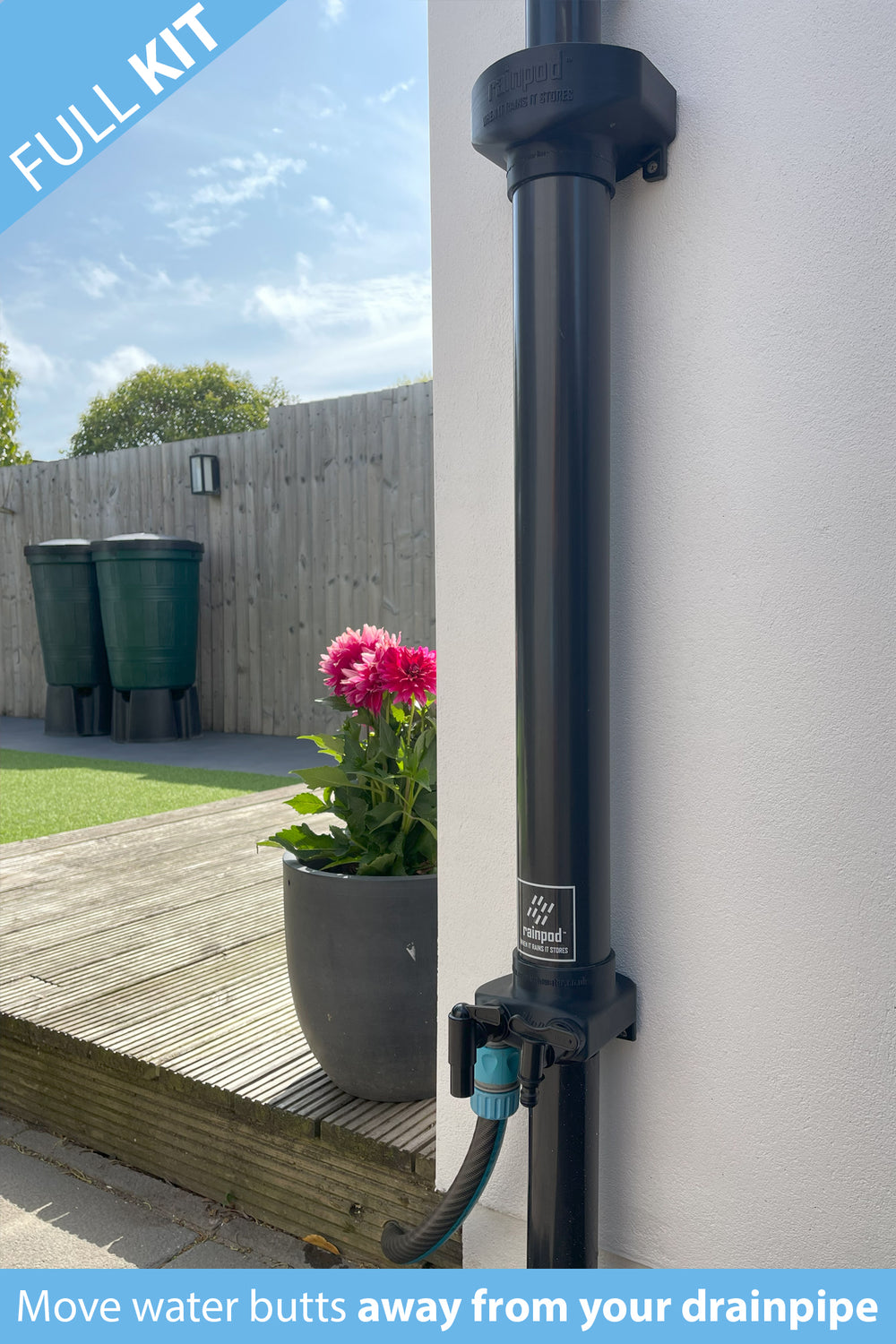
Gone green or started to smell? Here's how to clean a water butt properly, how often to do it, and the simple changes that...
Read article →
Water spilling over the top of your butt every time it rains? Here's why it happens and the simple, low-cost fixes that stop it...
Read article →
Comments