

No Products in the Cart
August 2026
Excellent product, definitely recommend it.
Mr DevVerified product review
Reviewed: RAINPOD™ Full Kit

Simple, clever rainwater harvesting. Fill all your water butts from one downpipe and put them wherever suits you. Designed and made in the UK.
Excellent · 4.5 on TrustpilotLearn
Talk to us
Be the first to hear about new products, offers and ways to save more water.
Is the rainwater in your water butt safe to drink, wash veg in, or fill a paddling pool with? Here's the honest, practical answer for UK gardens.
It's one of the first questions anyone asks once they start collecting rainwater: now that you've got a butt full of it, what can you actually do with it? The water looks clean enough, it fell straight out of the sky, so surely it's fine for anything? Not quite — but the good news is that the list of things it's genuinely good for is much longer than the short list of things it isn't.
Don't drink it, and don't give it to pets as their main water source. Do use it for pretty much everything else in the garden: watering beds, pots, lawns and greenhouses, topping up ponds (once it's had a day or two to settle), washing the car, hosing down patios, and rinsing tools and outdoor furniture. For most households that covers the vast majority of what a water butt actually gets used for anyway.
The water itself starts out clean, but by the time it's run off a roof, down a downpipe and sat in a butt for a few weeks, it's picked up things you don't want to swallow: bird droppings, moss and lichen washed off the tiles, dust, and whatever's settled on the bottom of the butt itself. None of that bothers a rose bed, but it's exactly the sort of thing that can carry bacteria harmful to people, and a butt with no lid or a cracked seal only makes it worse. UK guidance is consistent on this: water butt rainwater is classed as non-potable, meaning it hasn't been treated or tested to drinking water standards, so it shouldn't be drunk, used to make ice, or used for cooking or brushing teeth, however clear it looks.
A few uses sit somewhere in between, and it's worth knowing where the sensible line is:
A lot of this comes down to basic water butt hygiene rather than the rainwater itself being the problem. A lid that fits properly keeps out leaves, insects and light (which is what drives algae growth), and an occasional clean stops sludge building up on the bottom — we've covered exactly how to do that in How to Clean a Water Butt. A butt that's used regularly, rather than left to sit untouched for months, also stays fresher simply because the water isn't given the chance to stagnate.
If you're collecting into more than one butt, it's worth knowing roughly how much your roof can actually send their way in the first place — we've worked through the sums in How Much Rainwater Does Your Roof Actually Collect?, which is handy if you're trying to work out whether one butt is enough or you need to link a few together.
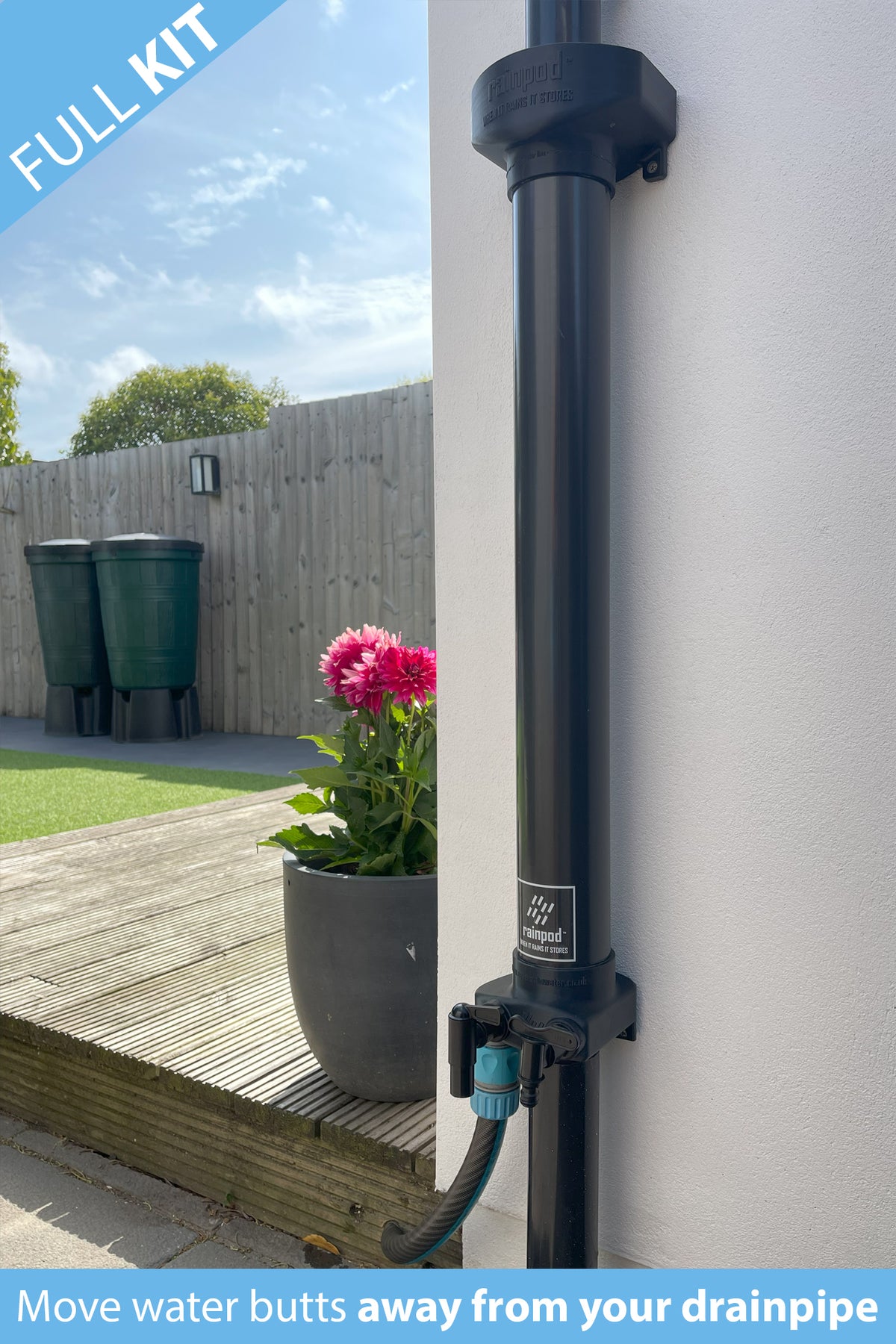
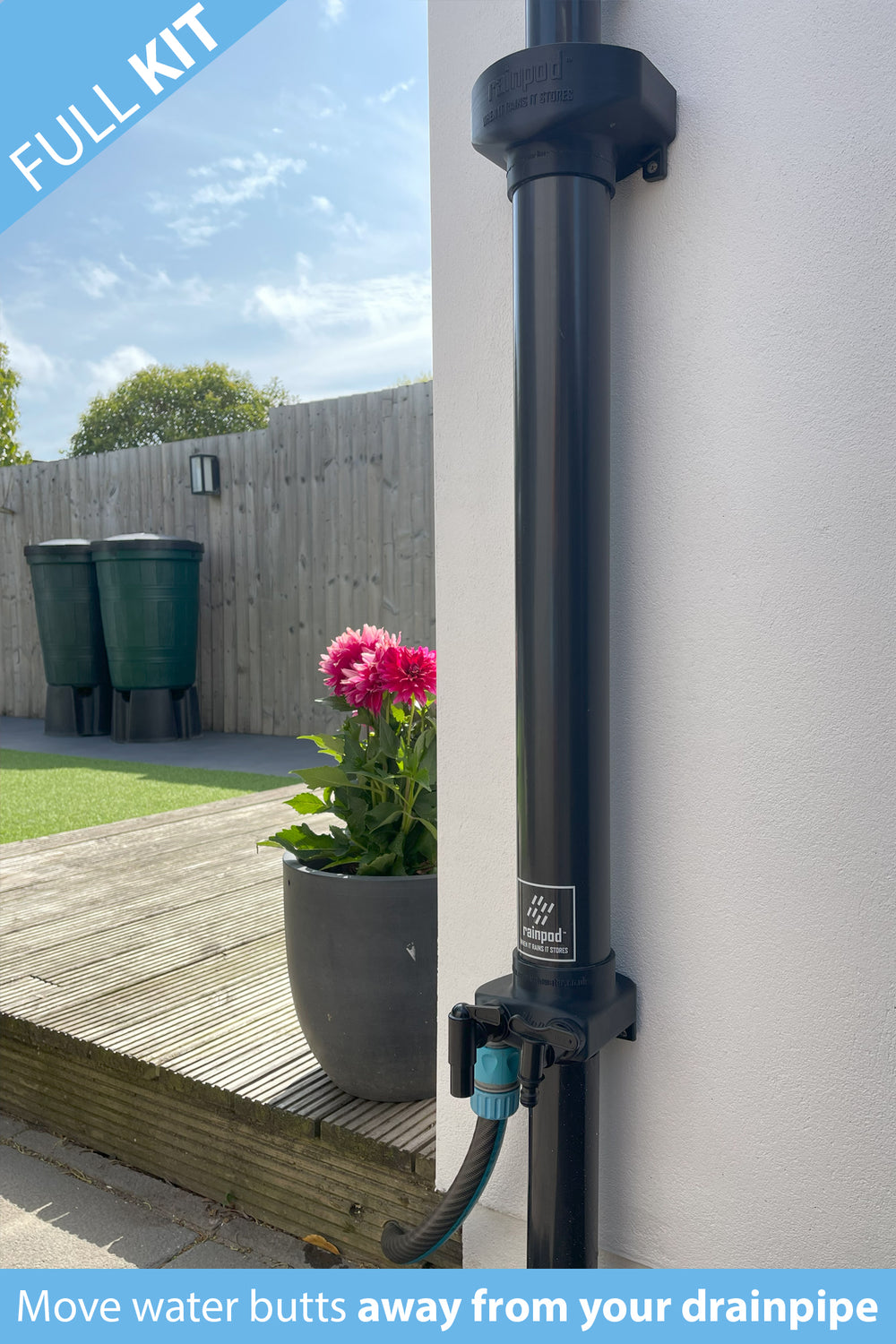
One reason people end up leaving water sat in a butt for too long is that it's awkward to get at — round the back of the shed, behind the bins, or just too far from where it's actually needed. RAINPOD is built around solving exactly that: it diverts rainwater from your downpipe to wherever your butts are easiest to site, and it has its own taps built into the pod itself, so you can draw off water right there rather than carrying watering cans back and forth. Using the water regularly, rather than letting it sit, is one of the simplest ways to keep it fresh — and having a tap close to where you actually need it is what makes that realistic day to day.
RAINPOD and RAINTAP are currently out of stock. You can leave your email on the RAINPOD product page to hear when they're back.
Water butt rainwater isn't drinking water, and it's not meant to be — but for almost everything you'd actually use a hose or watering can for in the garden, it's not just safe, it's often better than tap water. Keep the lid on, give it an occasional clean, and use it regularly, and there's very little reason to let a drop go to waste.
RAINPOD™ fits your downpipe and fills your water butts or tanks wherever they sit in the garden. Free to fill, no electricity, fitted in about 10 minutes.
Gone green or started to smell? Here's how to clean a water butt properly, how often to do it, and the simple changes that...
Read article →Water spilling over the top of your butt every time it rains? Here's why it happens and the simple, low-cost fixes that stop it...
Read article →Water butt or underground tank? A practical comparison of cost, capacity and installation effort to help you choose the right rainwater storage for a...
Read article →
Comments