

No Products in the Cart
August 2026
Excellent product, definitely recommend it.
Mr DevVerified product review
Reviewed: RAINPOD™ Full Kit

Simple, clever rainwater harvesting. Fill all your water butts from one downpipe and put them wherever suits you. Designed and made in the UK.
Excellent · 4.5 on TrustpilotLearn
Talk to us
Be the first to hear about new products, offers and ways to save more water.
Gone green or started to smell? Here's how to clean a water butt properly, how often to do it, and the simple changes that stop it happening again.
If your water butt has turned a bit green inside, or the water coming out of the tap has started to smell musty, it's not a sign anything's gone wrong with your setup — it's just what happens to any container of still water left outdoors for months at a time. The good news is that cleaning a water butt properly takes less than half an hour, needs nothing you can't already find under the sink, and makes a real difference to how pleasant the water is to use on your plants, pots and greenhouse.
Three things combine to cause it: sunlight, organic matter, and still water. Algae needs light to grow, so a butt that sits in a sunny spot will turn green faster than one tucked in shade. Leaves, moss and bits of roof grit that wash down the downpipe settle on the bottom and slowly break down, which is usually what causes the musty smell rather than the water itself. And because a water butt has no current or flow running through it, anything that gets in tends to stay put and build up over a season rather than washing away.
None of this means the water is unsafe to use on the garden — rainwater that looks a bit cloudy or has a faint earthy smell is still perfectly fine for watering beds, pots and lawns. It's really about keeping the system working well and pleasant to use, rather than a health concern.
Once a year is enough for most households, and the best time to do it is either early spring, before the butt starts filling up for the growing season, or early autumn, once the summer's heavy use has emptied it out. If you've noticed a strong smell, visible sludge at the bottom, or the tap running slower than it used to (a sign of debris collecting around the outlet), it's worth doing it sooner rather than waiting for your usual slot.
A few small habits make a bigger difference than people expect:
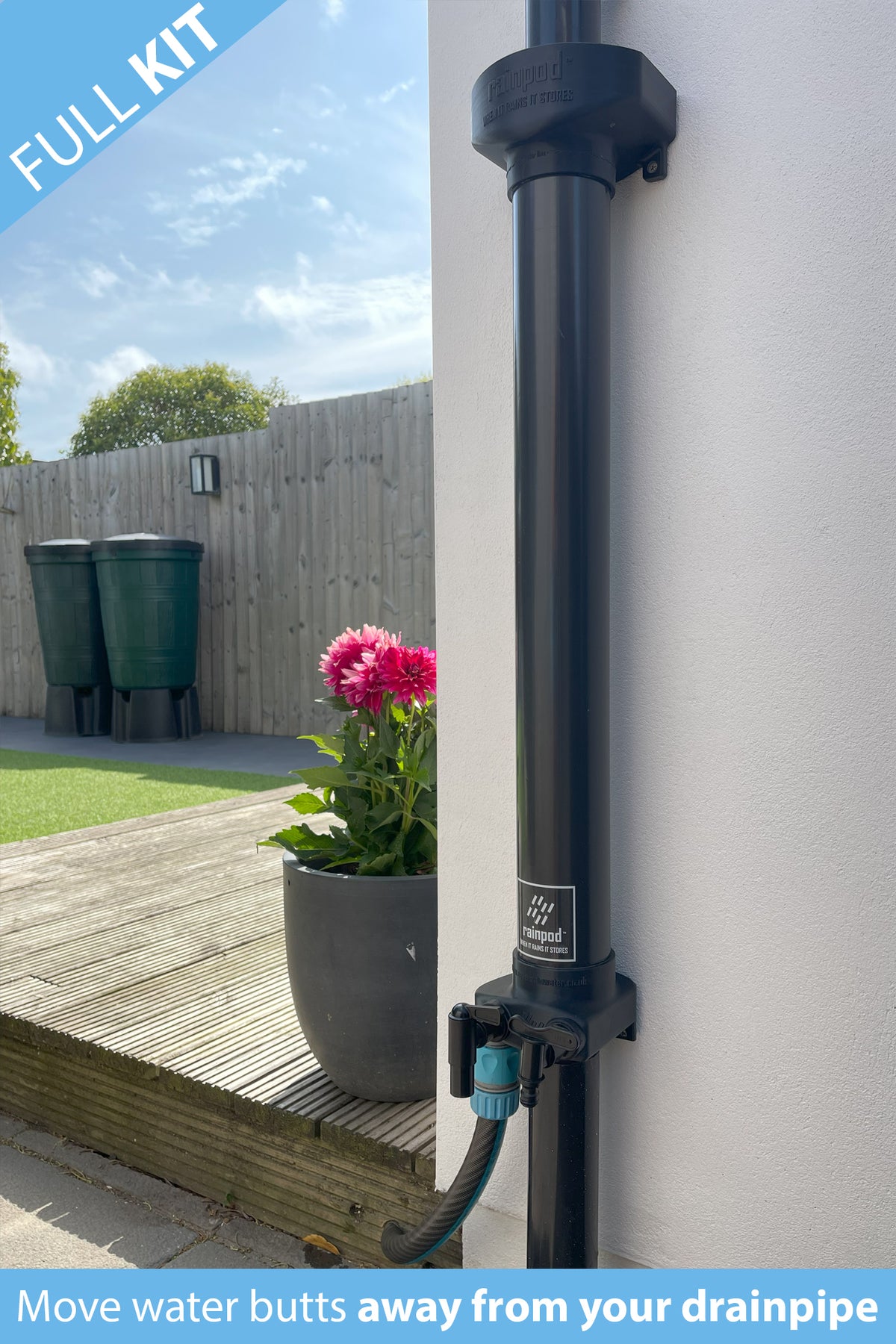
If you've linked several water butts together — whether that's with simple connector hose, as we covered in How to Connect Multiple Water Butts Together, or feeding them from a downpipe diverter like RAINPOD — it's worth cleaning each butt in the chain at the same time rather than just the first one, since sludge and algae can build up anywhere along the line, not only at the point water enters. Disconnect the linking hose first so dirty water from one butt doesn't simply wash straight into the next while you work.
RAINPOD and RAINTAP are currently out of stock. You can leave your email on the RAINPOD product page to hear when they're back.
A quick clean once or twice a year, a lid that actually fits, and a tap that doesn't drip will keep any water butt running sweet with minimal effort. It's a small job that pays off every time you turn the tap on through spring and summer.
RAINPOD™ fits your downpipe and fills your water butts or tanks wherever they sit in the garden. Free to fill, no electricity, fitted in about 10 minutes.
Water spilling over the top of your butt every time it rains? Here's why it happens and the simple, low-cost fixes that stop it...
Read article →Water butt or underground tank? A practical comparison of cost, capacity and installation effort to help you choose the right rainwater storage for a...
Read article →A simple formula for working out how many litres your roof sheds in an average UK year — and why most of it is...
Read article →
Comments