

No Products in the Cart
August 2026
Excellent product, definitely recommend it.
Mr DevVerified product review
Reviewed: RAINPOD™ Full Kit

Simple, clever rainwater harvesting. Fill all your water butts from one downpipe and put them wherever suits you. Designed and made in the UK.
Excellent · 4.5 on TrustpilotLearn
Talk to us
Be the first to hear about new products, offers and ways to save more water.
No room for a standard water butt? Here's how to save rainwater in a small garden, courtyard or patio with slimline butts, vertical storage and containers.

A tiny courtyard, a narrow side passage, a patio with barely room for a bin store — none of it rules out saving rainwater. The usual advice on how to save rainwater at home assumes you've got a spare corner for a 200-litre butt, but plenty of UK gardens simply don't. The good news is that collecting rainwater scales down just as well as it scales up, once you know which tricks actually save space.
Most of the water running off your roof has nothing to do with the size of your garden — it's about the size of your roof. Even a small terraced house can shed several thousand litres a year down its downpipe. The challenge in a small garden isn't catching the water, it's finding somewhere discreet to put it. So the question to ask isn't "do I have room for a water butt?" but "where's the smallest footprint I can store water in?"
Standard round water butts are space-hungry because they're designed to sit in the open. Slimline or "flat-back" butts are built to stand flush against a wall or fence, which is usually the only free space a small garden has. A 100-litre slimline butt tucked down the side return or behind a bin store does real work without eating into the lawn or patio you actually use.
A tall, narrow water butt on a stand holds the same volume as a short, wide one but takes up a fraction of the floor space — and the extra height gives you better tap pressure for filling a can. Raising any butt on a stand or a couple of paving slabs also makes it far easier to get a watering can under the tap, which matters even more when every inch of ground is doing double duty.
If one butt isn't enough but you've nowhere for a bigger one, several small butts dotted around the garden often fit better than a single large tank — one by the back door for the pots, a second behind the shed, a third near the greenhouse. The snag with a normal diverter kit is that every butt needs its own spot right next to the downpipe. A system like RAINPOD gets round that: it fits onto your existing downpipe and feeds as many butts as you like, wherever you've actually got space for them, filling them all at once with no pump or plumbing needed. You can see how the whole setup works on the RAINPOD website.
Balconies, roof terraces and tiny courtyards can still collect rainwater, just on a smaller scale. A large lidded container under a short length of guttering or a drainpipe extension will catch a surprising amount during a shower, and it can double as a plant stand or a side table when it's not raining. It won't replace a proper harvesting setup, but it takes the edge off watering during a dry spell and costs nothing to try.
A small garden doesn't mean no rainwater — it means being a bit more deliberate about shape and position rather than relying on one big butt in a gap that doesn't exist. Go slim, go vertical, spread smaller butts around rather than hunting for one large one, and use containers if you've no ground space at all. For the fuller picture on tanks, diverters and what a typical roof actually collects, our guide on how to save rainwater at home covers the basics from the ground up.
RAINPOD™ fits your downpipe and fills your water butts or tanks wherever they sit in the garden. Free to fill, no electricity, fitted in about 10 minutes.

Buy a water butt and most people put it wherever there happens to be a gap by the wall — usually right under the...
Read article →
Is the rainwater in your water butt safe to drink, wash veg in, or fill a paddling pool with? Here's the honest, practical answer...
Read article →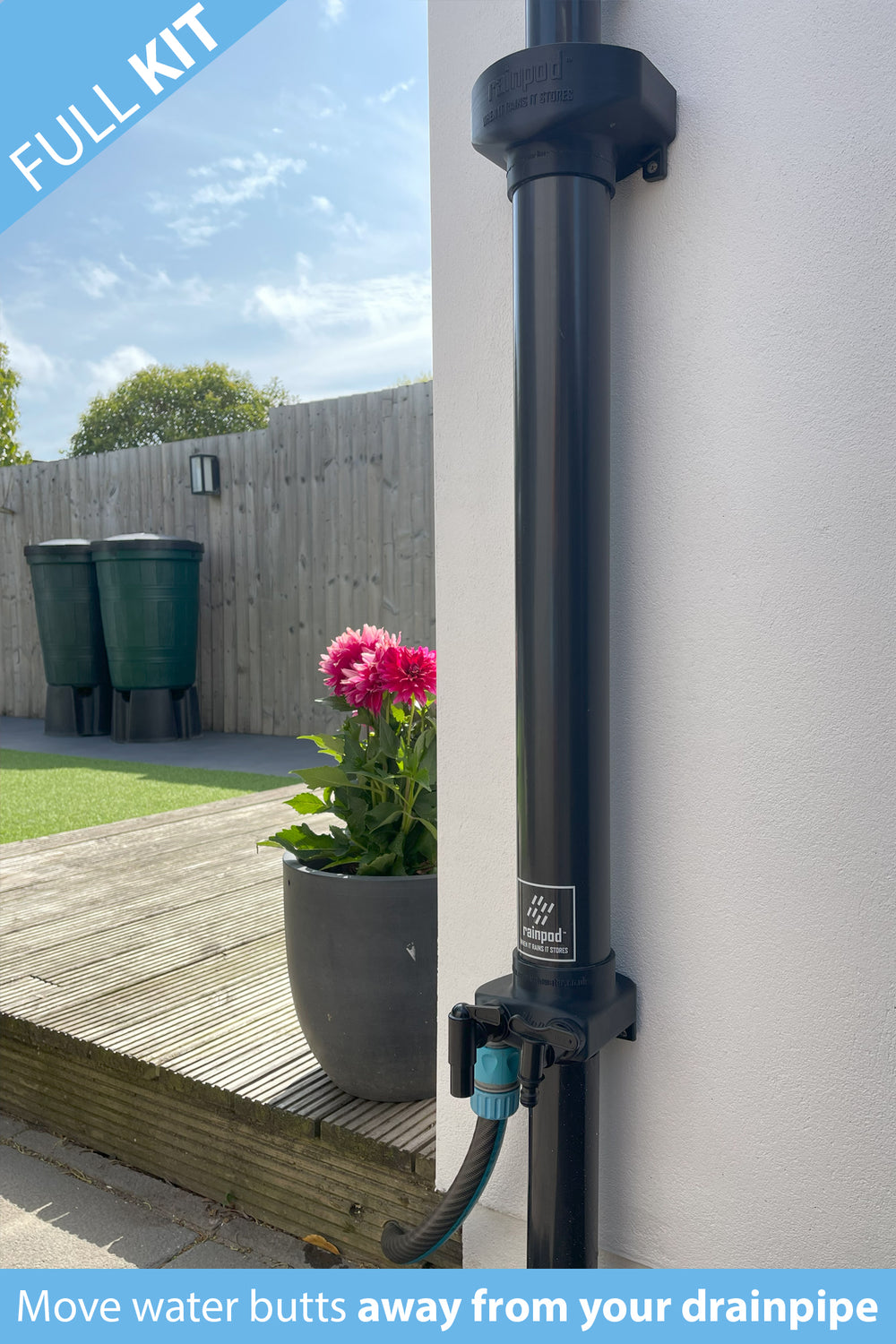
Gone green or started to smell? Here's how to clean a water butt properly, how often to do it, and the simple changes that...
Read article →
Comments