

No Products in the Cart
August 2026
Excellent product, definitely recommend it.
Mr DevVerified product review
Reviewed: RAINPOD™ Full Kit

Simple, clever rainwater harvesting. Fill all your water butts from one downpipe and put them wherever suits you. Designed and made in the UK.
Excellent · 4.5 on TrustpilotLearn
Talk to us
Be the first to hear about new products, offers and ways to save more water.
A simple, step-by-step UK guide to saving rainwater at home: how much your roof catches, how to collect and store it, and how to get the most out of it.
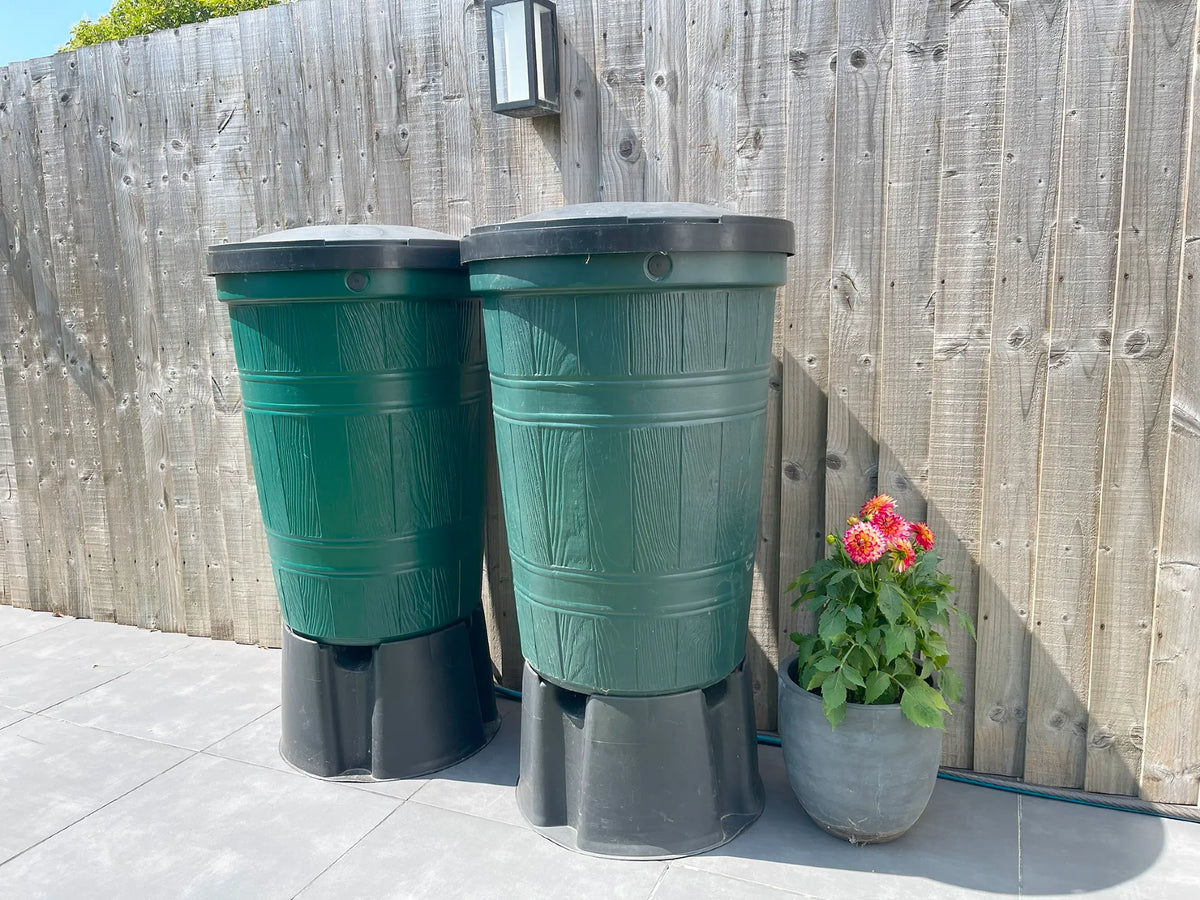
Every time it rains, hundreds of litres run off an ordinary house roof and straight down the drain. Catching even part of that gives you free, soft water for the garden, a reserve for dry spells and hosepipe bans, and a smaller water bill if you're on a meter. The good news is that saving rainwater at home is simple, and most of it needs nothing more than a downpipe and somewhere to store the water.
The quick rule is: roof area in m² × yearly rainfall in mm = litres. You won't catch every drop (some splashes, evaporates or overflows), so expect roughly 80–90% of that figure.
Yearly rainfall varies a lot across the UK, from around 600mm in the driest parts of the south-east to well over 1,000mm in the west and north. So a modest 40m² roof in a dry area still sheds around 20,000 litres a year down its downpipe. That's the equivalent of about 100 standard 200-litre water butts.
For a figure for your own house, pop your roof size into our roof rainwater calculator. It uses rainfall data for your area and shows what you're currently losing to the drain.
Your downpipe is where all the roof water comes together, so that's where you collect it. The simplest setup is a water butt beside the downpipe with a diverter kit that sends rain into the butt until it's full, then lets the rest carry on down the drain.
It works, but it has limits: the butt has to sit right next to the downpipe, which is usually by the back door or on a side return, and one butt fills up quickly in a proper downpour.
One 200-litre butt holds a tiny fraction of what your roof sheds, so the biggest single improvement is more storage. You can link water butts together so they fill as one, but with a standard diverter they all still have to crowd round the downpipe.
That's the problem RAINPOD was designed to solve. It fits onto your downpipe and fills as many water butts or tanks as you like, anywhere in your garden: behind the shed, down by the greenhouse or along a fence. They all fill together, the built-in overflow sends any extra down the drain once they're full, and you can draw every drop you've stored from the pod's own taps. It's gravity-fed, so there's no pump, electricity or plumbing. See every RAINPOD setup for ideas that match your garden.
Stored water is only useful if it's easy to get at. If you're carrying watering cans from the back door to the greenhouse, you'll use less of it. A rainwater tap such as RAINTAP puts a tap wherever you water most, fed from your butts, with no plumbing.
Winter is when most rain falls, so keep collecting. The main risk is frost: water left in exposed taps and hoses can freeze and split them. Our guide to water butts over winter covers what to do.
Yes. Stored rainwater isn't mains water, so bans don't cover it. See our hosepipe ban guide.
No. Water butts, diverters, RAINPOD and RAINTAP are all DIY jobs with basic tools.
You don't need to move the downpipe. Read water butt too far from your downpipe? Here's the fix.
Start with one butt if that's all you have room for. Every litre you catch is one less from the tap, and once you see how fast they fill, you'll want more storage.
RAINPOD™ fits your downpipe and fills your water butts or tanks wherever they sit in the garden. Free to fill, no electricity, fitted in about 10 minutes.
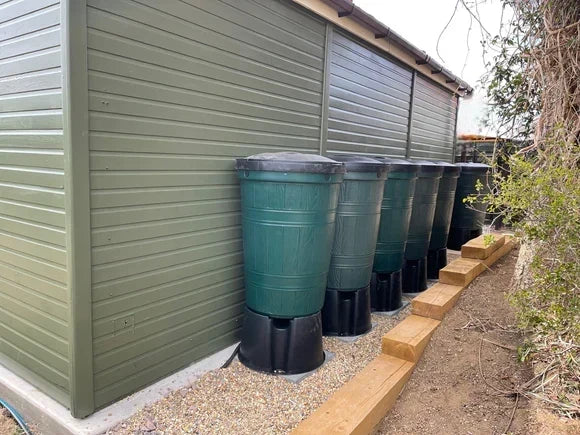
Winter is when water butts fill fastest. How to keep collecting through the colder months, protect taps and hoses from frost, and deal with...
Read article →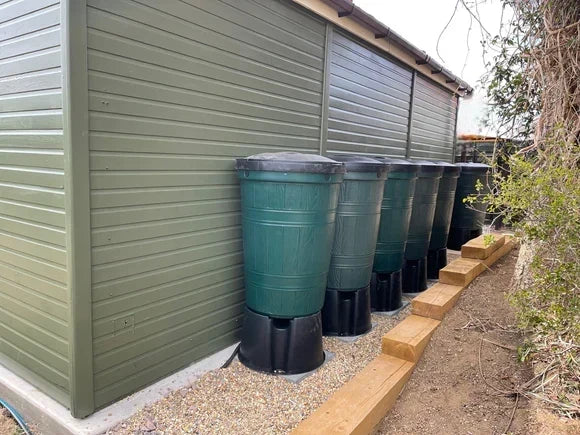
Several 2026 hosepipe bans are running into the autumn. What decides whether they come back next year, and why this winter is the time...
Read article →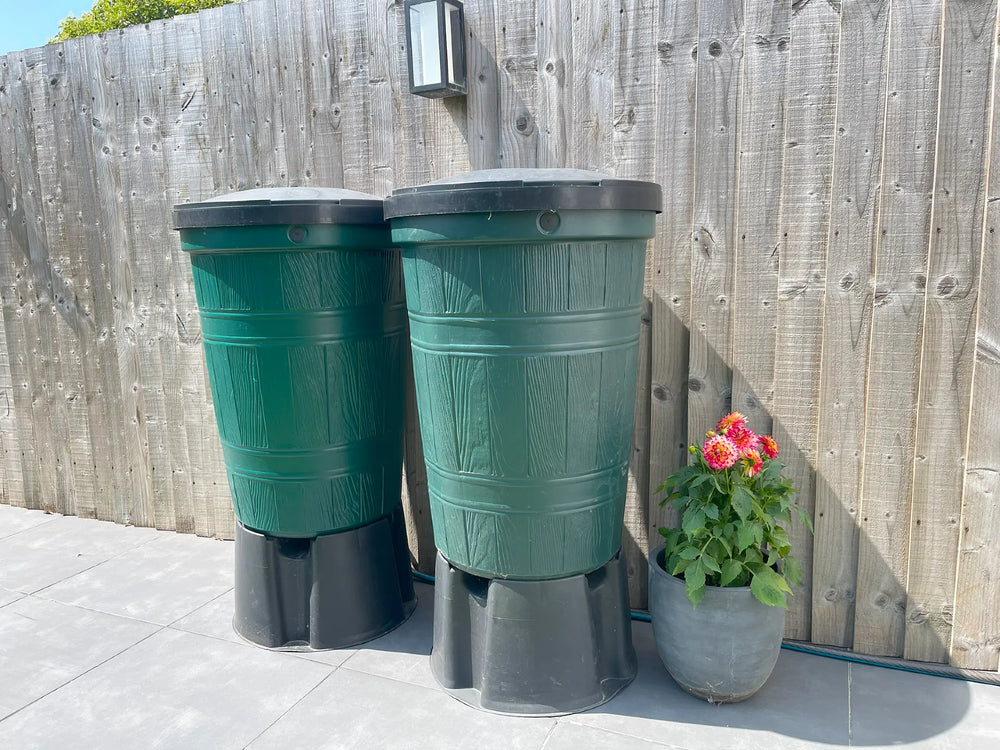
A downpipe rarely lines up with where you actually want stored rainwater. Here's how to get water from the downpipe to a butt (or...
Read article →
Comments