

No Products in the Cart
August 2026
Excellent product, definitely recommend it.
Mr DevVerified product review
Reviewed: RAINPOD™ Full Kit

Simple, clever rainwater harvesting. Fill all your water butts from one downpipe and put them wherever suits you. Designed and made in the UK.
Excellent · 4.5 on TrustpilotLearn
Talk to us
Be the first to hear about new products, offers and ways to save more water.
A downpipe rarely lines up with where you actually want stored rainwater. Here's how to get water from the downpipe to a butt (or several) wherever they're most useful.
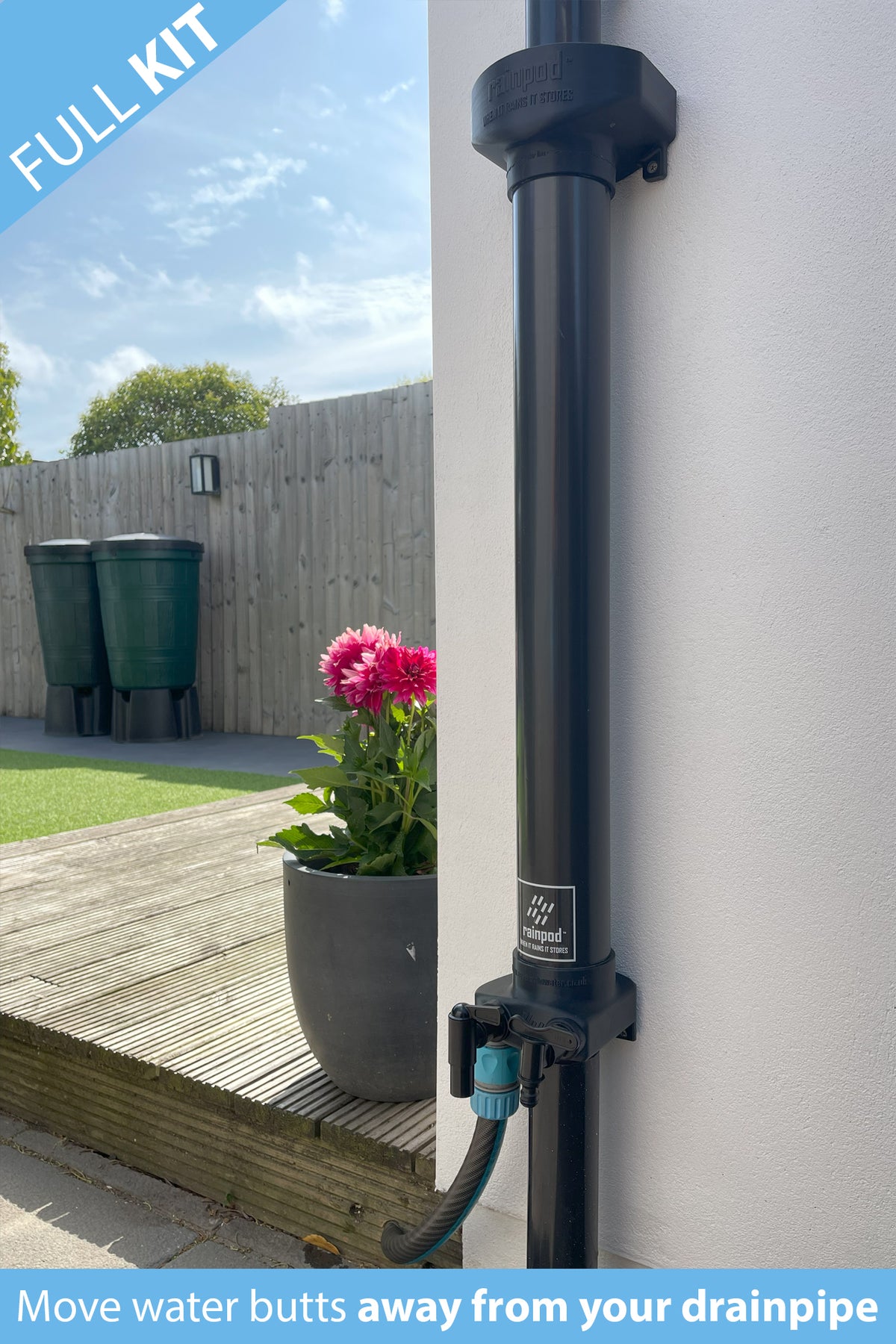
If your downpipe sits on a shaded side return, right next to the bins, or hard against the back door, you've probably already worked out that a water butt there isn't much use to your veg beds, greenhouse or pots round the other side of the garden. It's one of the most common reasons people give up on rainwater harvesting before they even start: the water collects in the wrong place, and lugging watering cans across the garden every day isn't sustainable for long.
The good news is you don't need to move your downpipe, dig a trench, or call a plumber to fix this. Here's what actually works.
Downpipes are positioned to get rainwater off the roof and away from the foundations as efficiently as possible — nobody designed your guttering with "convenient spot for a water butt near the greenhouse" in mind. On most UK homes that means the downpipe ends up on a side return, a narrow side passage, or wherever the roof drainage naturally falls, which is rarely the same spot as your most-watered beds.
Sounds obvious, but for a small garden it's sometimes genuinely the cheapest fix — group your thirstiest containers near the existing butt rather than trying to move the water. It won't help with an established veg patch or a greenhouse that can't be relocated, though.
A standard push-fit diverter only gets you a water butt sitting directly under or beside it. You can extend that with more downpipe and elbow joints to walk the outlet a metre or two along the same wall, which helps if your "too far" is really just "on the wrong side of the door". It won't get water round a corner of the house or across a lawn without a lot of extra pipework and brackets.
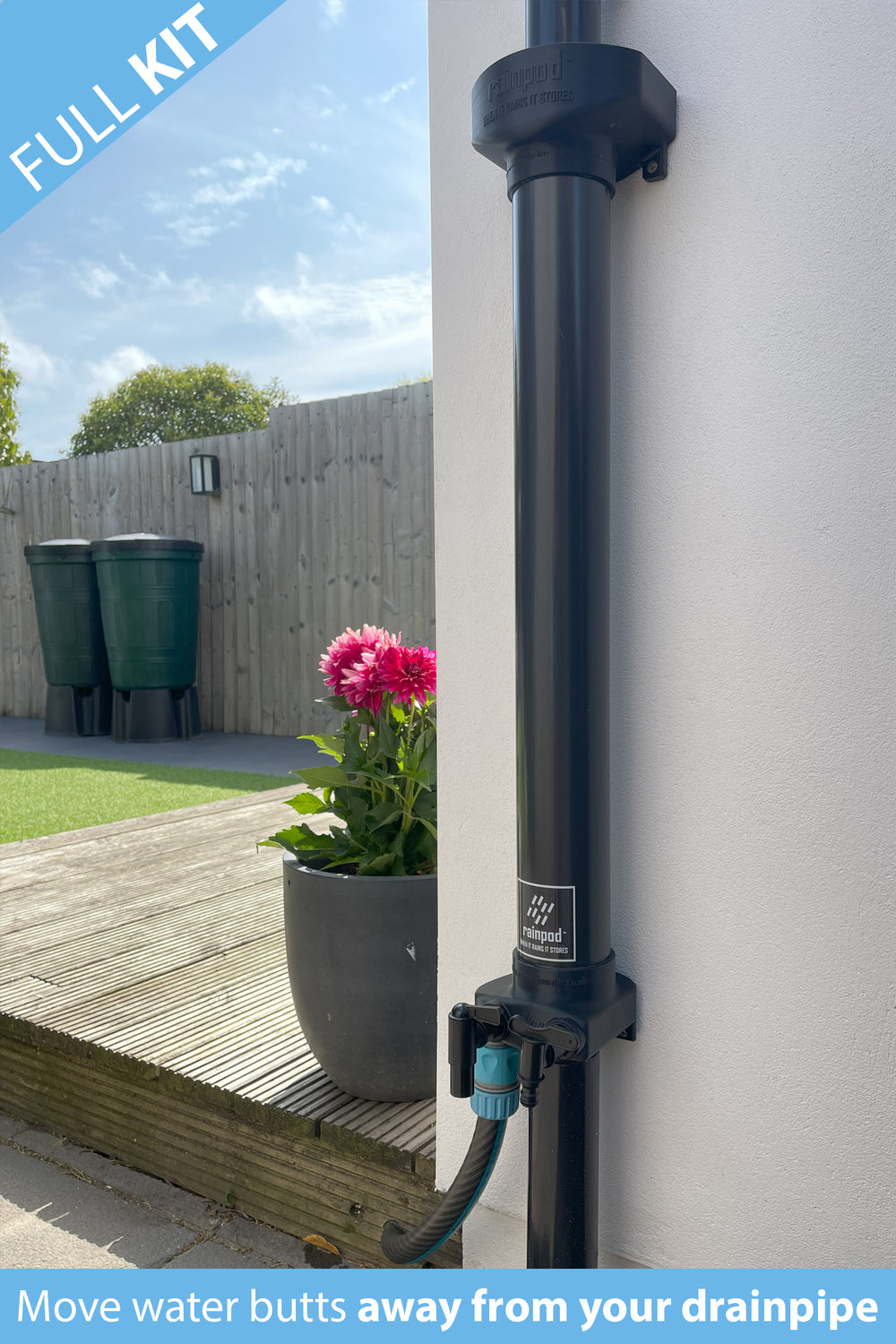
This is the option that actually solves "the butt needs to be on the other side of the garden". Rather than extending rigid downpipe, a diverter fitted to your existing downpipe feeds a length of hose that carries water to a butt — or several — positioned wherever you actually need them. This is exactly the job a RAINPOD system is built for: it fits onto your existing downpipe without cutting into your guttering system, and moves collected rainwater up to 25 metres away, so the storage can sit next to the greenhouse or veg patch instead of wherever the pipework happens to come down. Because it's a proper kit rather than a length of garden hose taped to a downpipe, it includes the right diameter hose for decent flow and the fittings to connect multiple butts once the water arrives.
If what you actually want is water at the greenhouse or the far border rather than a butt to look at, RAINTAP is worth a look — it delivers rainwater to a tap point without any digging or plumbing, so you get a usable outlet exactly where you're already standing with the watering can.
A downpipe in an inconvenient spot doesn't rule out harvesting rainwater — it just means the fix is moving the water to the storage, not moving the storage to the water. For most gardens where the butt needs to end up somewhere else entirely, a RAINPOD system is the straightforward way to do that without repositioning any pipework, and it scales up if you add more butts later.
RAINPOD™ fits your downpipe and fills your water butts or tanks wherever they sit in the garden. Free to fill, no electricity, fitted in about 10 minutes.
A single water butt runs dry fast in a dry spell. Here's how to link more together, why so many generic connector kits leak...
Read article →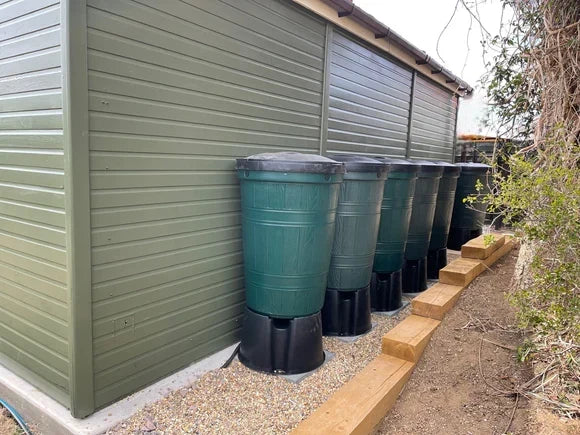
Hosepipe bans are back in force across parts of the UK in 2026. Here's what they actually restrict, why water butts are exempt, and...
Read article →
When you hear "rainwater harvesting," your first thought might be about conserving water or reducing your environmental footprint. While these are incredibly important aspects,...
Read article →
Comments