

No Products in the Cart
August 2026
Excellent product, definitely recommend it.
Mr DevVerified product review
Reviewed: RAINPOD™ Full Kit

Simple, clever rainwater harvesting. Fill all your water butts from one downpipe and put them wherever suits you. Designed and made in the UK.
Excellent · 4.5 on TrustpilotLearn
Talk to us
Be the first to hear about new products, offers and ways to save more water.
A simple formula for working out how many litres your roof sheds in an average UK year — and why most of it is currently going down the drain.
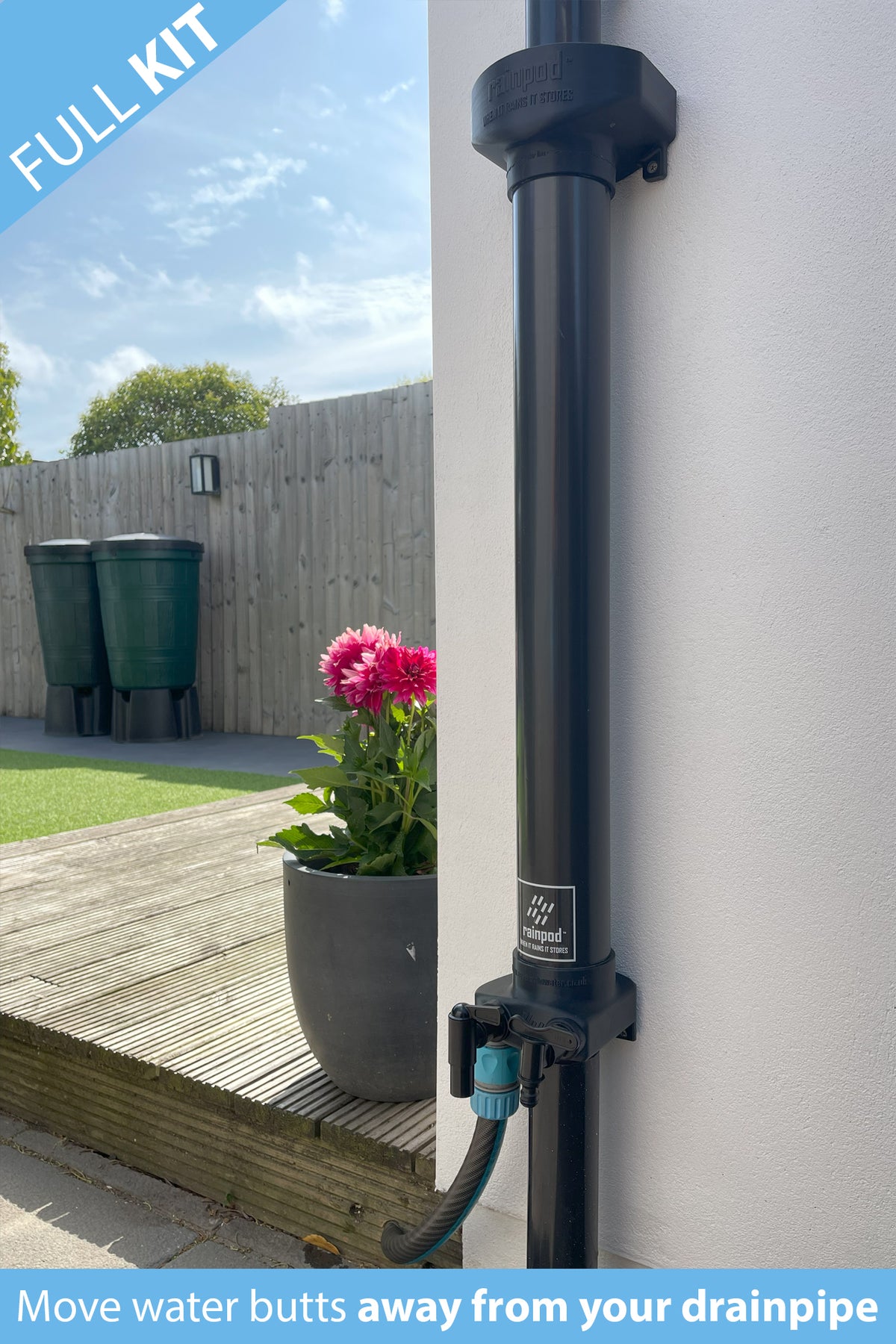
Stand under your gutter during a heavy downpour and it's obvious a lot of water is coming off your roof. What's less obvious is the actual number. Most UK homeowners who collect rainwater never work out how much their own roof is capable of catching — they just put out a butt and hope. Once you see the real figure, it changes how you think about storage.
You don't need anything complicated to get a useful estimate:
Roof area (m²) × annual rainfall (mm) × 0.8–0.9 = litres collected per year
A few notes on each part:
Take a fairly typical UK semi-detached house, with a roof footprint of around 45m². In a drier part of the south-east — Essex, Kent, parts of London — annual rainfall sits around 550–600mm. In the wetter west and north — Wales, the Lake District, western Scotland — it's often over 1,000mm, sometimes well over.
At 600mm: 45 × 600 = 27,000 litres gross, so roughly 22,000–24,000 litres a year after losses. At 1,000mm, the same roof sheds 45,000 litres gross, around 36,000–40,000 litres after losses.
Either way, that's the equivalent of well over 100 standard 200-litre water butts a year — from one ordinary roof. A garage or shed roof, even a small one at 15–20m², is still shedding several thousand litres a year that usually just goes straight down the drain.
National averages are a starting point, but rainfall varies a surprising amount even within the same county. For a figure based on your actual roof size and local rainfall data, use our roof rainwater calculator — put in your roof dimensions and it works out what your specific roof collects, and what you're currently losing to the drain.
These are yearly totals, but UK rain doesn't fall in a steady drip. Winter months are usually wetter overall, but some of the heaviest single totals come from summer thunderstorms that dump a lot of water in a short space of time. A single downpour can fill a 200-litre butt in minutes — and once it's full, every extra litre just overflows onto the ground unless it has somewhere else to go.
The gap between what a roof sheds (tens of thousands of litres a year) and what one butt holds (200 litres) is the real argument for more storage, not a bigger butt. Two or three butts linked together help — see our guide on connecting water butts together — but a standard diverter still only fills whatever's directly below the downpipe.
RAINPOD fits onto your existing downpipe and fills as many butts or tanks as you like, wherever they sit in the garden, so you can actually use more of what your roof is already collecting instead of watching most of it run to the drain. Once you've seen your own roof's number from the calculator, it's a much easier decision about how much storage is actually worth having.
A little. Smooth materials like slate or metal shed slightly more than rough tiles, and a flat roof with a membrane can lose more to evaporation in summer. For a home set-up, it's a small effect next to roof area and rainfall — not worth worrying about.
Just the section that drains to the downpipe you're collecting from. Many houses have two or more downpipes serving different roof areas, so if you're only fitting a butt to one of them, use that section's footprint, not the whole house.
More roof means more water available, but only if you've got the storage to use it. A big roof feeding one small butt wastes more, proportionally, than a small roof that's well matched to its storage.
Work out your own number with the roof rainwater calculator, then decide how much of it you actually want to keep.
RAINPOD™ fits your downpipe and fills your water butts or tanks wherever they sit in the garden. Free to fill, no electricity, fitted in about 10 minutes.
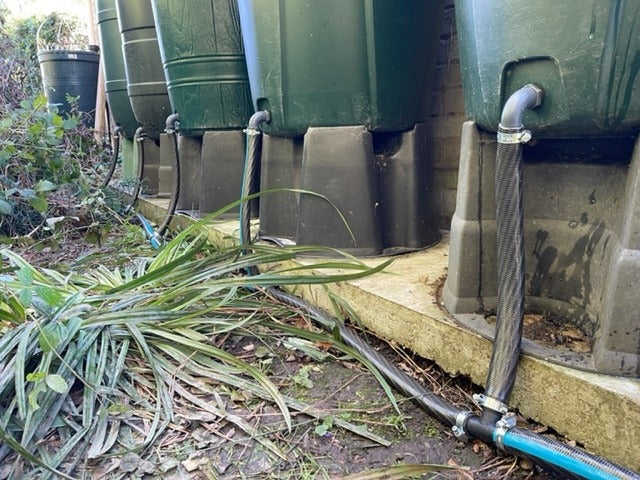
Winter is when water butts fill fastest. How to keep collecting through the colder months, protect taps and hoses from frost, and deal with...
Read article →
Several 2026 hosepipe bans are running into the autumn. What decides whether they come back next year, and why this winter is the time...
Read article →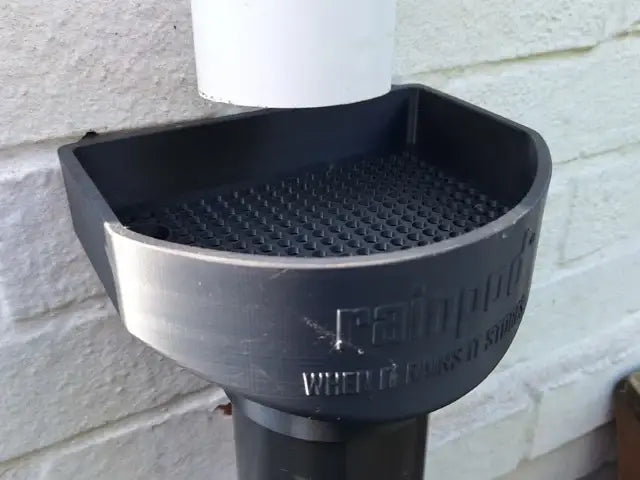
A simple, step-by-step UK guide to saving rainwater at home: how much your roof catches, how to collect and store it, and how to...
Read article →
Comments