

No Products in the Cart
August 2026
Excellent product, definitely recommend it.
Mr DevVerified product review
Reviewed: RAINPOD™ Full Kit

Simple, clever rainwater harvesting. Fill all your water butts from one downpipe and put them wherever suits you. Designed and made in the UK.
Excellent · 4.5 on TrustpilotLearn
Talk to us
Be the first to hear about new products, offers and ways to save more water.
Water butt or underground tank? A practical comparison of cost, capacity and installation effort to help you choose the right rainwater storage for a UK garden.
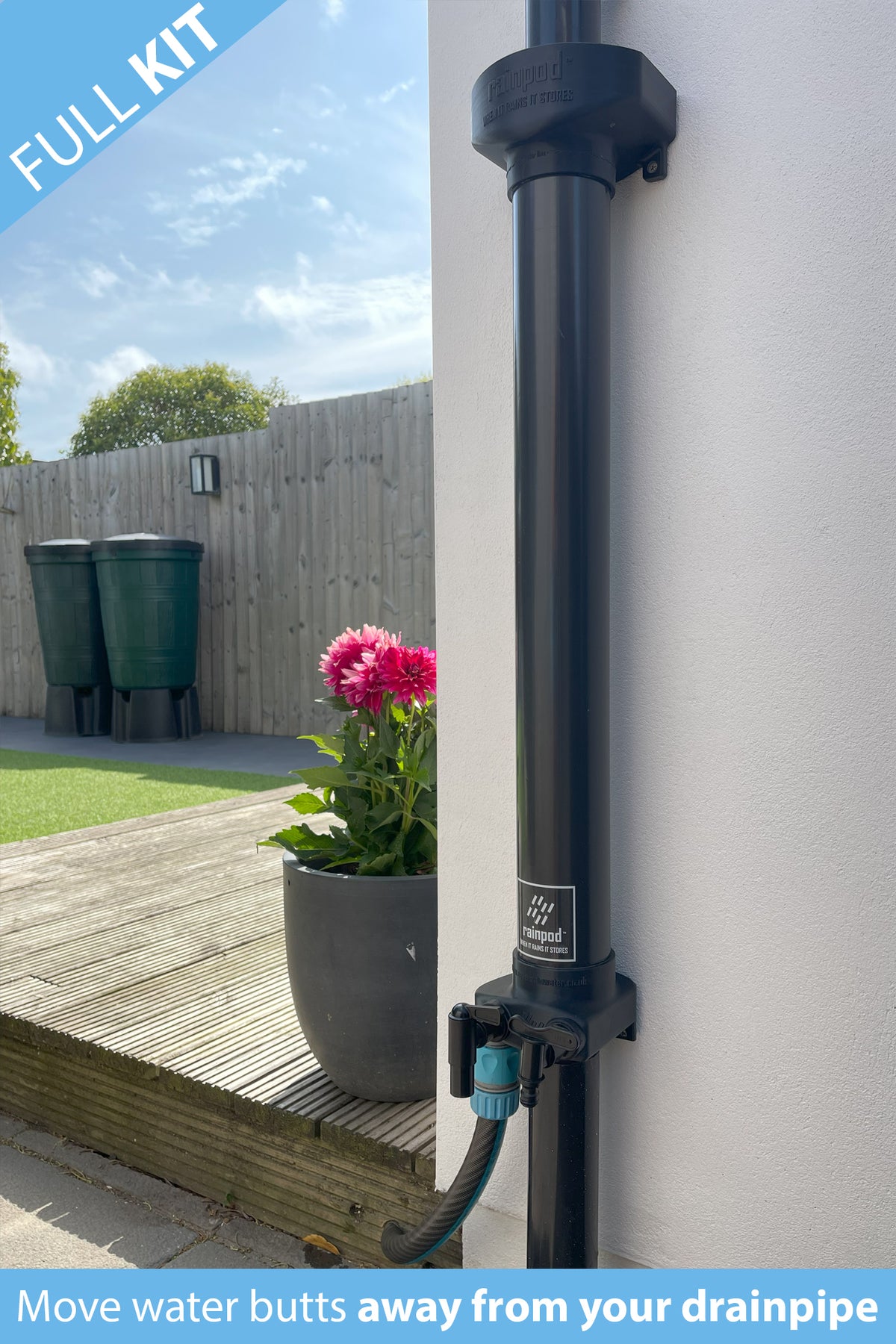
If you're seriously into collecting rainwater — not just for the odd watering can, but to genuinely cut your mains water use — at some point the question comes up: should you keep adding water butts, or go the whole way and put in an underground tank? Both work. They suit different gardens, budgets and levels of commitment, so here's how to actually decide.
A water butt system sits above ground, connected to your downpipe, and is visible in the garden (though it needn't be ugly — slimline and feature-finish butts have come a long way). An underground rainwater tank is buried below the lawn, patio or driveway, fed by a pipe run from your downpipes, and accessed via a submersible pump and a manhole cover at the surface. Both store the same rainwater; the difference is mostly about scale, cost and effort.
This is where underground tanks pull ahead on paper. A typical domestic tank runs from 1,500 to 5,000+ litres — the kind of volume that can realistically supply a garden through most of a dry summer, or even feed a toilet or washing machine via a separate plumbed-in system. A single water butt holds 100-200 litres, which a thirsty garden can empty in a couple of days. But capacity isn't fixed to the container type: linking several water butts together, which our connection kits make straightforward, gets you into the 600-1,000+ litre range without digging anything up — plenty for most gardens that just need watering, rather than a plumbed-in system.
A quality water butt costs anywhere from £30 to £100, a RAINPOD diverter kit to feed it is under £100, and you can fit the whole thing yourself in under an hour with no digging. An underground tank, by contrast, usually runs from £1,500 to £5,000+ once you include the excavation, the tank itself, the pump, pipework and (often) a groundworker or plumber — this isn't a weekend DIY job for most people. It means digging a hole large enough for a multi-thousand-litre tank, running pipework below ground, and reinstating whatever was there before (lawn, patio, driveway). If you're not already resurfacing that area of the garden, that disruption alone is worth weighing against the extra capacity.
Water butts (linked, if needed) make sense for most gardens, especially where you're watering beds, pots, a greenhouse or a small lawn, and where keeping costs and disruption low matters. They're also the only realistic option if you're renting or might move house — a water butt comes with you; a buried tank doesn't.
An underground tank earns its cost when you've got a large garden or allotment with serious irrigation needs, when you want to plumb rainwater into the house for flushing toilets or running a washing machine (which usually needs filtration and a pump anyway), or when you're already doing groundworks — a new patio, driveway or extension — since the marginal cost of adding a tank while the ground's already open is much lower than doing it as a standalone project.
It's worth saying: these aren't mutually exclusive, and for most UK gardens the practical answer is scaled-up surface storage rather than going underground at all. A RAINPOD system lets you fill multiple butts spread around the garden from one downpipe — not just two stacked by the wall — so you can build up several hundred litres of capacity in stages, adding more butts as budget allows, without committing to a single irreversible installation. If a few hundred litres turns out not to be enough, you've lost nothing by starting there; if you later decide you do want a buried tank, the surface storage can simply move or be repurposed.
For most UK homeowners, water butts (linked for more capacity) are the sensible starting point: cheaper, no digging, no commitment, and more than enough storage for typical garden use. Underground tanks suit larger plots, serious irrigation or in-house plumbing, and make the most financial sense alongside other groundworks you're already planning. Start with what your garden actually needs rather than what sounds most impressive — you can always add more storage later.
RAINPOD™ fits your downpipe and fills your water butts or tanks wherever they sit in the garden. Free to fill, no electricity, fitted in about 10 minutes.
A simple formula for working out how many litres your roof sheds in an average UK year — and why most of it is...
Read article →
Winter is when water butts fill fastest. How to keep collecting through the colder months, protect taps and hoses from frost, and deal with...
Read article →
Several 2026 hosepipe bans are running into the autumn. What decides whether they come back next year, and why this winter is the time...
Read article →
Comments